
 English
  Spanish
  French
  German
  Italian
  Portuguese
 5 Things to Compare Before Buying Data Center Batteries at Scale
Table of Contents
- 5 Things to Compare Before Buying Data Center Batteries at Scale
- Why data center batteries have become a scale-buying decision
- How much runtime should data center batteries deliver
- Which battery chemistry fits backup power for data centers
- Footprint, heat, and service access in data center batteries
- How data center UPS battery integration affects deployment
- Total cost of ownership and supplier execution
- Why MANLY Battery fits projects needing a custom battery solution
- FAQ
- What are the 5 key components for a data centre?
- What to consider when buying batteries?
- Learn More About Battery
At scale, data center batteries are no longer a routine line item. They shape runtime strategy, facility layout, integration risk, service labor, and the long-term cost of backup power for data centers.
A strong buying decision starts with five checks: required runtime, battery chemistry, cabinet footprint, UPS integration, and supplier execution. Teams that compare these factors early usually avoid the most expensive problems later, especially during rollout, commissioning, and replacement cycles.
| Comparison point | What to verify first | Why it matters at scale |
|---|---|---|
| Runtime | Load profile, autonomy target, generator pickup | Prevents under-sizing or over-buying |
| Chemistry | Safety profile, maintenance, lifecycle | Changes space, service, and replacement plans |
| Footprint | Cabinet size, heat, access clearances | Affects room layout and future expansion |
| UPS integration | Controls, alarms, communications, BMS | Reduces deployment friction and startup delays |
| Supplier execution | Lead time, documentation, post-startup support | Protects schedule and operating continuity |
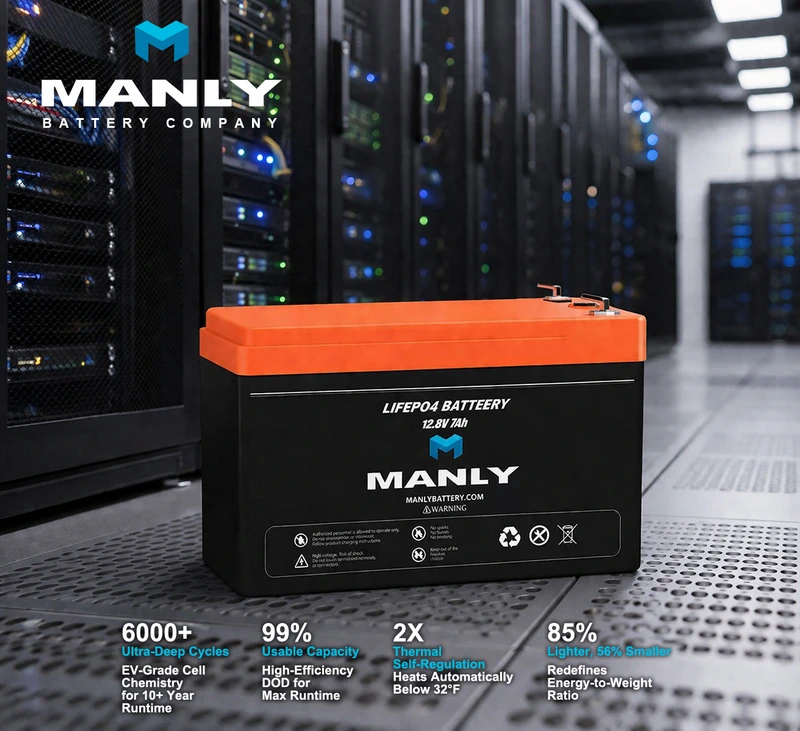
Why data center batteries have become a scale-buying decision
Large deployments multiply small design mistakes. A battery choice that works in one room can create major cost, schedule, and maintenance problems when repeated across many sites, white spaces, or phases.
For that reason, buyers now treat data center batteries as part of a broader infrastructure decision. The battery platform must match uptime targets, site standards, service workflows, and future expansion plans instead of solving only the initial purchase.
Scale changes risk
Scale raises risk because every mismatch gets repeated. If one battery platform needs extra floor space, more cooling attention, or more frequent maintenance, that burden expands across every cabinet, room, and site.
This is why large buyers compare standardization value as carefully as technical specs. A platform that is easy to deploy, monitor, and replace often creates more value than a lower upfront price.
Uptime drives selection
Uptime remains the main reason teams invest in data center batteries. The battery system must bridge utility loss, support the UPS, and hold the load stable until the alternate power path is ready.
That means battery selection should start with the operational consequence of a failure. For many projects, the real question is not which battery is cheapest. It is which battery platform keeps critical loads stable with the least operational exposure.
Procurement needs standardization
Procurement at scale works better when the organization narrows choices into a repeatable standard. Standardized data center batteries simplify approvals, spare strategy, technician training, commissioning documents, and future refresh planning.
A consistent battery platform also helps teams compare supplier execution more clearly. It is easier to judge lead time, support quality, and lifecycle cost when the design basis stays consistent across projects.
How much runtime should data center batteries deliver
Runtime should be set by the load and the power architecture, not by habit. Most large facilities do not buy batteries to run the site for long periods. They buy them to deliver stable ride-through during the most critical transition window.
That makes runtime a design variable, not a marketing number. The correct answer depends on the UPS topology, generator strategy, site redundancy, and how the load behaves during loss and recovery events.
Load profile first
The load profile comes first because it defines what the battery must actually support. A flat, predictable load behaves very differently from a fast-changing load with high-density compute, storage, or switching events.
Teams should map critical loads, step changes, and recovery behavior before sizing data center battery backup. That prevents the common mistake of selecting batteries on nameplate assumptions instead of real operating demand.
Runtime target
The runtime target should match the intended role of the system. In many facilities, the battery only needs to hold the load through a short transfer window. In others, the UPS battery must support a longer operational buffer for more conservative recovery planning.
A good buying process separates “required runtime” from “preferred margin.” That distinction helps buyers avoid over-sizing data center batteries just to feel safer, while still keeping enough autonomy for realistic site conditions.
Generator handoff window
The generator handoff window is often the most important runtime checkpoint. If the battery supports the UPS cleanly until generation is stable, the design may be correct even if the battery does not provide long standalone operation.
This is where uninterruptible power supply battery planning needs discipline. The battery should be sized for the actual transfer scenario, including startup behavior, sequence timing, and the margin needed for a safe, repeatable handoff.
Which battery chemistry fits backup power for data centers
The right battery chemistry depends on the project’s priorities. Buyers usually compare safety profile, maintenance burden, footprint, lifecycle value, and compatibility with the deployment model.
No chemistry wins every project. The best fit changes with runtime goals, service model, room constraints, and how the organization values lifecycle efficiency versus upfront cost.
Lithium ion battery
A lithium ion battery platform is often selected when buyers want higher energy density, lower maintenance, and a smaller physical footprint. Those strengths matter when cabinet space is expensive or when the team wants a cleaner service model across many installations.
This category includes the lithium ion UPS battery options now common in modern critical power planning. Within lithium, LiFePO4 is often favored where buyers place more weight on thermal stability, service life, and predictable long-term operation.
VRLA battery tradeoffs
A VRLA battery still appears in many installed bases because it is familiar and often lower in upfront purchase cost. That said, large buyers usually compare it carefully against newer platforms because maintenance burden, weight, replacement interval, and space use can change the full economics.
For some retrofit environments, VRLA remains a workable option. For new large-scale rollouts, teams often find that the lower entry cost does not tell the full story once service, replacements, and room constraints are counted.
Nickel zinc battery fit
A nickel zinc battery can enter the discussion when buyers want a different chemistry profile and are evaluating alternatives to both lithium and lead-acid. Its fit depends on project goals, supplier maturity, and how the organization weighs performance, service model, and availability.
Because chemistry decisions affect many downstream requirements, buyers should compare each option against the same decision frame. The most useful frame includes footprint, lifecycle, maintenance exposure, and integration path rather than purchase price alone.
| Battery chemistry | Common buying advantage | Main tradeoff to review | Typical fit |
|---|---|---|---|
| Lithium ion battery | Smaller footprint, lower maintenance, strong lifecycle value | Higher upfront cost | Modern large-scale deployments |
| VRLA battery | Familiar design, lower initial spend | More weight, more service attention, shorter replacement cycle | Legacy rooms and selected retrofits |
| Nickel zinc battery | Alternative chemistry option for critical backup evaluation | Fit depends on supplier support and project requirements | Niche or selective project review |
Footprint, heat, and service access in data center batteries
Space and service constraints often decide the project before price does. A battery platform may look attractive on paper, then lose value when the cabinet layout, thermal conditions, or maintenance clearances are reviewed.
That is why experienced buyers compare physical deployment early. Data center batteries affect more than energy storage. They influence room design, service safety, and how easily the facility can scale later.
Cabinet footprint
Cabinet footprint matters because white space and electrical rooms are expensive assets. A system with higher energy density can reduce floor use and leave more flexibility for adjacent power equipment or future growth.
This is one reason buyers often compare a modern data center UPS battery platform against older footprints. A smaller cabinet plan can simplify layout decisions and reduce the hidden cost of battery deployment.
Cooling impact
Battery performance and service life are shaped by thermal conditions. Heat should be treated as a design input, not an afterthought, especially when cabinets sit near other power equipment or in tightly managed mechanical environments.
Teams evaluating data center batteries should review thermal behavior together with room conditions, airflow paths, and expected operating range. A battery system that fits the electrical design but complicates thermal management can still be the wrong buy.
Front service access
Front service access affects safety, labor time, and operational disruption. Buyers should ask how technicians inspect, isolate, replace, or troubleshoot the battery system without creating unnecessary exposure or blocking adjacent equipment.
This point becomes more important as deployments grow. Good access design supports faster service and more predictable maintenance windows, which directly improves the real operating value of data center batteries.
How data center UPS battery integration affects deployment
Integration problems slow projects more than many buyers expect. A battery can look technically sound yet still create delays if controls, alarms, communications, and startup workflows do not align cleanly with the UPS environment.
That is why integration deserves its own comparison category. A well-matched data center UPS battery reduces commissioning friction, speeds acceptance, and gives operators clearer visibility from day one.
UPS interface
The UPS interface should be confirmed early because mismatched electrical or control assumptions can delay deployment. Buyers should verify how the battery system connects to the UPS, how it behaves during transfer events, and how the protection scheme is coordinated.
This review matters for both retrofit and greenfield work. A battery system that integrates cleanly with the UPS usually shortens the path from delivery to operation.
BMS visibility
BMS visibility determines how well operators can understand battery status in real time. The Battery Management System should provide usable information on state, alarms, fault conditions, and operating limits without forcing the team into a separate blind spot.
That visibility is especially important for data center battery backup because operators need fast, reliable status awareness during abnormal events. If the BMS cannot support clear monitoring and escalation, the deployment risk increases.
Commissioning workflow
Commissioning workflow should be treated as part of product quality. Teams should ask what documents are supplied, what tests are required, which parameters must be validated, and how startup responsibility is divided between site staff and the vendor.
A smoother workflow lowers schedule risk. It also reduces the chance that the backup power for data centers design will look complete on paper but arrive late or fail acceptance in the field.
Total cost of ownership and supplier execution
The real cost of data center batteries is not limited to purchase price. Buyers should compare lifecycle cost, replacement timing, service labor, floor use, downtime exposure, and the operational effect of a delayed shipment or weak support response.
Supplier execution belongs in the same conversation. A technically strong battery platform still becomes a poor investment if the manufacturer cannot support documentation, delivery, startup, and post-install problem solving.
Capex vs lifecycle
Capex should be reviewed alongside the full service life of the system. A lower upfront number can lose its advantage if the battery needs more maintenance, occupies more room, or reaches replacement sooner than competing options.
This is why many large buyers compare battery chemistry through a TCO lens. Lifecycle cost often reveals more than the initial quote, especially for repeated deployments.
Lead times
Lead times affect project value directly because electrical work, commissioning windows, and go-live dates depend on them. Buyers should ask not only for standard lead time, but also for production visibility, change control, and schedule protection.
For scaled purchases, lead-time discipline is part of vendor quality. A capable data center battery manufacturer should be able to support planning, not just provide hardware.
Support after startup
Support after startup matters because batteries are long-life assets inside a mission-critical system. Buyers should understand who handles troubleshooting, which documents remain available, how warranty claims are processed, and how field issues are escalated.
A supplier with strong post-startup support reduces operational uncertainty. That support becomes even more valuable when the project includes a custom battery solution instead of a standard catalog configuration.
Why MANLY Battery fits projects needing a custom battery solution
MANLY Battery fits best where the project requires configuration work, application matching, and a supplier that can align the battery platform with UPS, cabinet, and site-level requirements. That is the practical meaning of a custom battery solution in critical power work.
For buyers evaluating data center batteries at scale, the question is not whether a vendor can sell a battery. The question is whether the vendor can match voltage, capacity, layout, monitoring, and deployment needs without forcing the site into unnecessary compromise.
LiFePO4 UPS battery
A LiFePO4 UPS battery is a strong fit when the project values long cycle life, low maintenance, and a more stable lithium chemistry profile. Those traits support cleaner operation in facilities that want predictable performance and lower service burden.
This also aligns with current buyer interest in lithium ion UPS battery platforms that support dense installations without the maintenance model associated with older battery types.
Custom project scope
Custom scope should cover more than electrical ratings. Buyers should ask whether the supplier can support cabinet dimensions, communications mapping, BMS functions, documentation, site conditions, and startup requirements.
That is where MANLY Battery becomes relevant for projects that need more than an off-the-shelf part number. A capable data center battery manufacturer should be able to shape the battery package around the deployment, not force the deployment around the battery.
FAQ
What are the 5 key components for a data centre?
The five core components of a data centre are IT hardware, networking, power infrastructure, cooling systems, and security/monitoring. In practice, IT hardware includes servers and storage, networking moves data between systems, power infrastructure covers UPS, switchgear, generators, and distribution, cooling keeps equipment within safe operating limits, and security/monitoring protects uptime and access. Schneider Electric describes data center architecture with six main elements—computing, storage, networks, power, cooling, and security—so the five-part version simply combines computing and storage into one IT layer.
What to consider when buying batteries?
When buying batteries, focus first on runtime and load requirement, battery chemistry, safety and BMS, installation environment, and lifecycle cost. Runtime and load tell you how much energy and power the battery must deliver. Chemistry affects footprint, maintenance, and service life. Safety depends on thermal controls, protection design, and code compliance. Installation conditions such as heat, humidity, and enclosure rating affect reliability. Lifecycle cost should include efficiency, warranty, replacement interval, and support—not just purchase price.
For backup or UPS use, the most practical buying shortcut is this: match the battery to the actual job, not the lowest quote. A battery that fits the real runtime window, operating environment, and maintenance plan usually delivers better value than a cheaper option that adds service risk or shortens replacement cycles.


