
 English
  Spanish
  French
  German
  Italian
  Portuguese
 AGV Lithium Battery Packs for Fast-Charge Warehouse Fleets
Table of Contents
- AGV Lithium Battery Packs for Fast-Charge Warehouse Fleets
- Why AGV Lithium Battery Packs Keep Warehouse Fleets Running Longer
- What Fast-Charge Performance Really Means for AGV Battery Operations
- LiFePO4, LTO, and Lead-Acid: Which Chemistry Fits Warehouse Fleets?
- How to Choose an AGV Lithium Battery for Fast-Charge Duty
- What Buyers Should Check Before Ordering a Custom AGV Battery Pack
- Learn More About Battery
AGV lithium battery packs help warehouse fleets stay productive because they charge faster, recover energy during short stops, and support more usable cycles than traditional lead-acid systems. In fast-moving distribution environments, that combination directly improves uptime, reduces idle equipment, and makes multi-shift operations easier to manage.
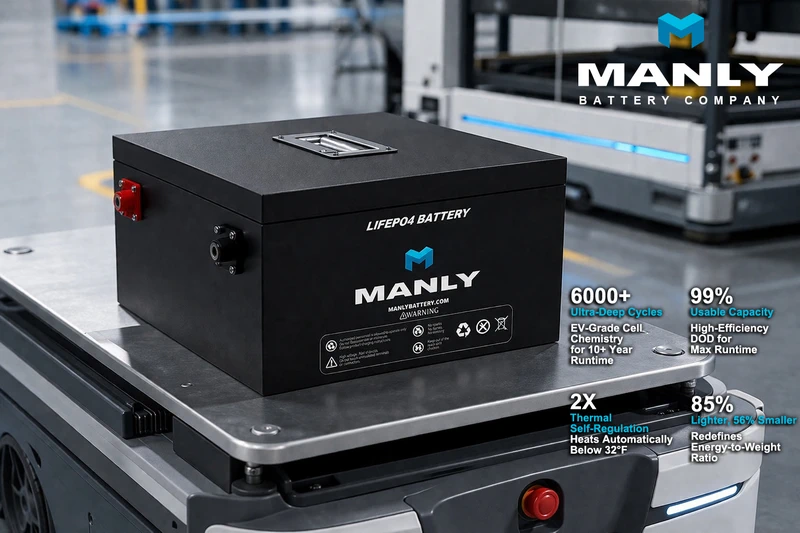
Why AGV Lithium Battery Packs Keep Warehouse Fleets Running Longer
A well-matched agv lithium battery keeps vehicles available for work longer because it shortens charging windows and reduces the long offline periods common with older battery systems. For warehouse teams that run constant picking, pallet movement, and replenishment, longer runtime is not only a battery issue; it is a throughput issue.
Fast-Charge Uptime Gains
Fast charging increases productive hours because AGVs spend less time parked and more time moving goods. In practical terms, lithium-based systems can often recharge in about 1 to 2 hours, while traditional lead-acid systems usually require much longer charging and cooling time.
That difference changes fleet planning. A warehouse using agv battery platforms with fast-charge capability can add energy during breaks, loading pauses, or shift transitions instead of waiting for a full long-cycle recharge. The result is more completed trips per vehicle and better labor-to-equipment efficiency.
Less Idle Time
Idle time drops when charging fits into the workday instead of interrupting it. Opportunity charging allows an agv lithium battery to recover useful capacity during short planned stops, which helps fleets return to service quickly.
This matters most in high-throughput facilities. If vehicles no longer sit offline for half a shift, managers can schedule work with fewer dead zones, fewer battery swaps, and less manual intervention. That is one reason industrial lithium battery systems have become the preferred choice in many automated material-handling settings.
More Shift Coverage
Multi-shift coverage improves when the battery supports repeat fast charging without constant maintenance penalties. A warehouse running two or three shifts needs energy systems that can handle frequent use, short charging windows, and consistent output across the day.
That is where battery for agv selection affects operations far beyond energy storage alone. A stronger charging strategy lets the same fleet support more duty hours, smoother handoffs between shifts, and fewer productivity losses during peak order windows.
What Fast-Charge Performance Really Means for AGV Battery Operations
Fast-charge performance is not just about how quickly a pack reaches 100 percent. For real AGV operations, it means how safely and efficiently the battery accepts charge, how often partial charging can occur, and how reliably the vehicle returns to duty under daily workload conditions.
Charge Rate Basics
Charge rate defines how quickly a battery can safely take in or deliver power relative to its capacity. In warehouse use, the practical question is simple: can the pack recover enough energy during short stops to support the next work cycle?
A capable robot battery system depends on more than chemistry alone. Cell design, pack structure, thermal control, charger quality, and BMS logic all affect how aggressively the system can charge without overheating or shortening service life. Lower state of charge usually allows faster energy intake, while higher state of charge often requires slower charging for protection.
24V vs 48V Duty
Voltage selection should match vehicle duty, system design, and power demand. A 24v agv battery often fits lighter-duty vehicles or applications with lower power requirements, while a 48v agv battery usually supports heavier loads, longer routes, or higher-demand drive systems more effectively.
The choice is not about one voltage being universally better. It is about matching the battery platform to motor requirements, route length, payload profile, and charger infrastructure. When the voltage platform matches the duty cycle, the fleet usually sees better efficiency, more stable power delivery, and cleaner integration with controls and chargers.
Peak-Shift Demands
Peak periods expose battery weaknesses fast because repeated starts, heavier traffic, and compressed charging windows all raise energy stress. A fast-charge system must handle those demand spikes without causing unreliable charging behavior or frequent thermal limits.
This is where amr battery and AGV fleet planning often overlap. In both cases, managers need batteries that can accept fast top-ups, maintain stable output during intense use, and communicate accurately with fleet software so the charging schedule supports operations instead of disrupting them.
LiFePO4, LTO, and Lead-Acid: Which Chemistry Fits Warehouse Fleets?
Battery chemistry determines how a fleet charges, how long it lasts, and how much maintenance it needs. For most warehouse operations, the real decision comes down to balancing fast-charge capability, cycle life, safety, cost, and fit with the fleet’s daily duty pattern.
| Chemistry | Best fit | Key strengths | Main trade-off |
|---|---|---|---|
| LiFePO4 | Daily warehouse fleets | Fast charging, long life, strong thermal stability | Lower energy density than some lithium chemistries |
| LTO | Very high-charge-rate operations | Extremely long cycle life, rapid charging | Lower energy density, different voltage characteristics |
| Lead-acid | Budget-first, lower-demand use | Lower upfront cost | Slow charging, cooling time, more maintenance |
LiFePO4 for Daily Use
A lifepo4 agv battery fits daily warehouse duty well because it combines fast charging, long cycle life, and strong thermal stability. For many facilities, that balance makes LiFePO4 the most practical chemistry for routine multi-shift automation.
LiFePO4 also supports deeper cycling and lower maintenance than lead-acid systems. That helps buyers reduce service interruptions while keeping charging performance predictable. For fleets that need a durable, safe, and repeatable agv lithium battery platform, LiFePO4 is often the most operationally balanced option.
LTO for Rapid Charging
LTO works best where ultra-fast charging and very high cycle life matter more than energy density. In demanding applications with frequent short charge bursts, LTO can support aggressive charging behavior and a very high number of cycles.
That advantage comes with trade-offs. LTO systems typically store less energy per kilogram than many other lithium chemistries, so buyers need to assess vehicle space, pack size, and runtime needs carefully. In the right duty pattern, though, LTO can be a strong fit for specialized fast-charge fleets.
Lead-Acid Trade-Offs
Lead-acid still appears in some fleets because the initial purchase price is lower, but the operational penalties are significant. Charging usually takes much longer, cooling adds more offline time, and maintenance demands remain higher.
Those limitations hurt utilization in fast-paced warehouses. A lead-acid agv battery may look cheaper at the start, yet slower charging, shorter service life, and more downtime often make it less attractive for modern warehouse automation.
How to Choose an AGV Lithium Battery for Fast-Charge Duty
The right agv lithium battery depends on workload, vehicle design, charging strategy, and system compatibility. Buyers get better results when they size the battery around real route data and power demand instead of choosing only by nominal voltage or advertised capacity.
Battery Sizing First
Battery sizing should start with duty cycle, payload, route length, and shift pattern. A pack that is too small creates charging bottlenecks, while an oversized pack adds cost, weight, and packaging complexity without always improving fleet efficiency.
For a custom agv battery pack, sizing should reflect usable energy, not just nameplate capacity. Buyers should evaluate how much energy the vehicle actually consumes between planned charging windows and whether the charging strategy relies on depot charging, opportunity charging, or scheduled top-ups.
Pack Design Choices
Pack design affects runtime, integration, serviceability, and long-term reliability. Cell arrangement, enclosure structure, connectors, communication layout, and thermal design all influence how the battery performs in real warehouse conditions.
A capable custom agv battery pack should also match the mechanical and electrical constraints of the vehicle. That includes available space, vibration exposure, ambient conditions, and the charging hardware already installed or planned for the site. Good pack design is not cosmetic; it is operational engineering.
BMS and Safety
BMS integration is essential because fast charging only works well when the battery, charger, and vehicle share accurate data. The BMS helps enforce voltage and temperature limits, supports state-of-charge reporting, and adjusts charging behavior to protect the pack.
For buyers evaluating an industrial lithium battery, safety should include more than a basic protection list. Real value comes from reliable monitoring, fault detection, cell balancing, and coordinated charging control. A strong BMS supports uptime, extends service life, and reduces the risk of overheating or charging errors.
What Buyers Should Check Before Ordering a Custom AGV Battery Pack
A purchase decision should cover more than battery chemistry and quoted price. Before ordering a custom agv battery pack, buyers should verify integration details, charger compatibility, and supplier support because these factors often determine whether the fleet performs well after deployment.
OEM Integration Needs
Integration requirements should be defined before final pack approval. The battery must match the AGV’s voltage range, current demand, control logic, physical space, and communication method.
That review should include docking behavior, connector layout, and data exchange with the vehicle and facility systems. If the project involves a fleet platform, the buyer should also confirm whether the agv battery manufacturer supports CAN bus, Modbus, or the specific protocol required by the AGV and warehouse control environment.
Charger Compatibility
Charger compatibility is non-negotiable because a mismatch can damage the battery, reduce life, or create safety risks. The charger must match battery chemistry, voltage, current limits, and communication requirements.
Modern wired charging systems often support guided docking, direct-contact charging, and smart current adjustment based on battery status. For a fast-charge agv lithium battery, that compatibility should be confirmed at the pack, charger, and software level rather than assumed from voltage alone.
Support and Warranty
Supplier support matters because fast-charge fleets rely on stable performance, quick troubleshooting, and accurate technical guidance. A credible partner should help with selection, commissioning, diagnostics, maintenance planning, and staff training.
Warranty terms should also be reviewed carefully. Buyers should check what the warranty covers, what operating conditions apply, and whether support includes replacement guidance, fault analysis, and documentation for safe long-term use. A capable agv battery manufacturer supports the full operating life of the system, not just the shipment date.


